What Does a Chemical Peel Do? Benefits, Results, and What to Expect
Chemical peels are one of the most commonly requested cosmetic treatments for acne, dark spots, wrinkles, uneven texture, and signs of aging.
But what does a chemical peel actually do?
Chemical peels work by applying a specialized solution to the skin that removes damaged outer skin cells and stimulates healthier skin renewal underneath. Depending on the type of peel, this can improve skin tone, texture, discoloration, acne, and early signs of aging.
If you are considering a chemical peel, understanding what chemical peels do—and what they do not do—can help determine whether treatment is right for you.
How Does a Chemical Peel Work?
A chemical peel uses carefully selected acids to accelerate exfoliation and increase skin cell turnover.
As older damaged skin cells shed, newer skin cells replace them. This process can help improve:
Uneven skin texture
Acne and clogged pores
Hyperpigmentation and dark spots
Fine lines and wrinkles
Sun damage
Acne scars
Overall skin brightness
The purpose of a chemical peel is not simply to make skin peel. The goal is healthier, smoother, more even-looking skin.
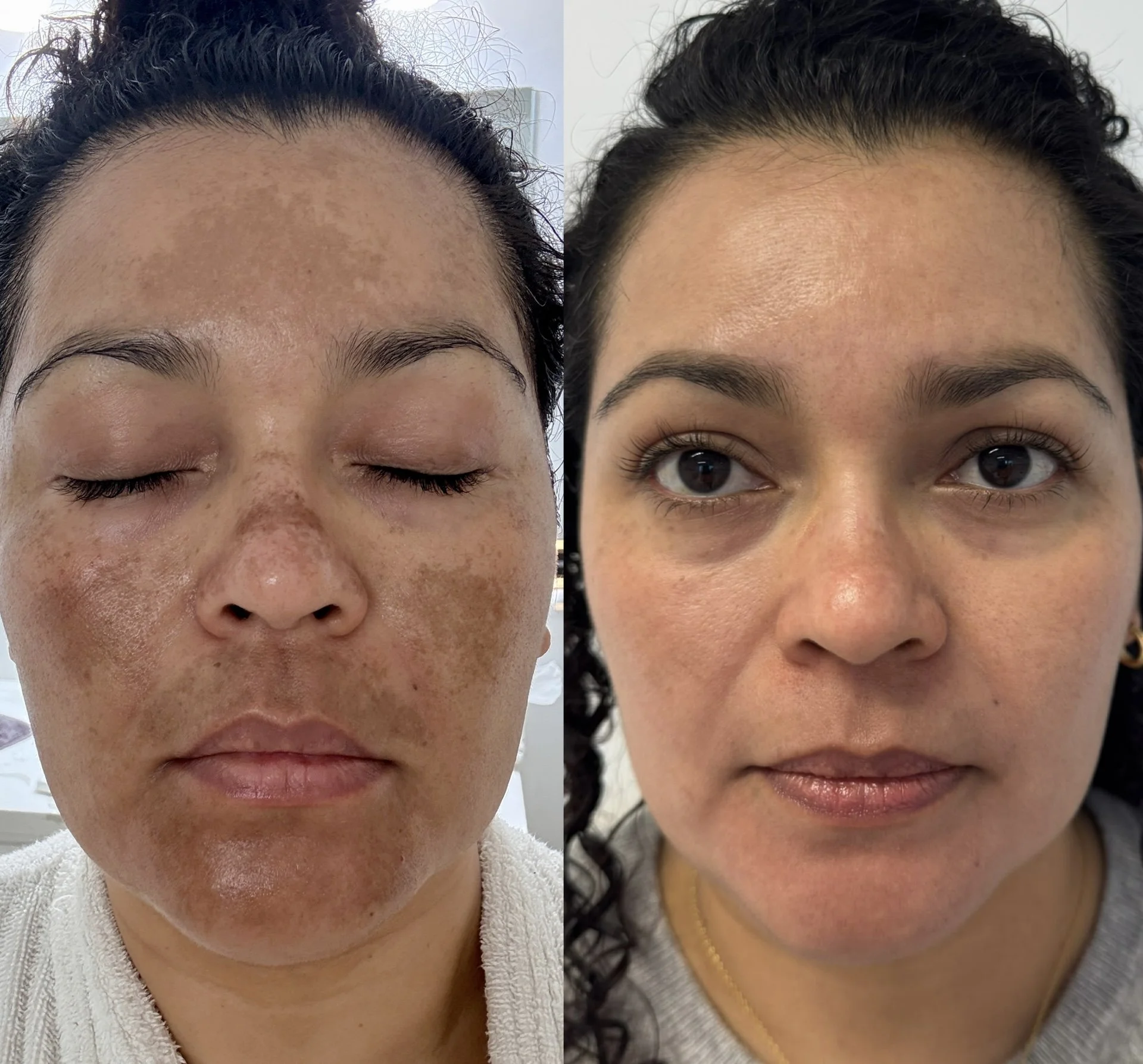
Before (Left) I After (Right)
A combination of prescriptions and Reve Enlighten Peel was used to achieve this result.
What Skin Problems Do Chemical Peels Help Treat?
Chemical Peels for Acne
Chemical peels may help reduce acne by exfoliating the skin, helping unclog pores, and improving skin turnover.
Many patients choose chemical peels to help manage breakouts while improving acne-related discoloration at the same time.
Chemical Peels for Dark Spots and Hyperpigmentation
Chemical peels are commonly used to improve:
Sun spots
Uneven skin tone
Melasma (in selected cases)
Because discoloration develops at different skin depths, multiple treatments are often recommended.
Chemical Peels for Fine Lines and Wrinkles
Chemical peels can improve rough texture and soften mild signs of aging by accelerating skin renewal. Some deeper chemical peels may also stimulate collagen remodeling.
Chemical Peels for Acne Scars
Some chemical peels may improve mild acne scarring and uneven skin texture.
Deeper scars often require combination treatments.
Will Your Skin Peel After a Chemical Peel?
Sometimes yes. Sometimes no.
Many people imagine dramatic peeling after treatment, but visible peeling depends on the type of chemical peel being performed.
Some lighter chemical peels produce minimal visible peeling while still improving skin quality.
Stronger peels may create several days of flaking or shedding.
More peeling does not necessarily mean better results.
How Long Does It Take to See Results From a Chemical Peel?
Some patients notice brighter skin within days.
However, concerns such as acne scars, pigmentation, wrinkles, and texture often require multiple treatments.
Chemical peels generally provide the best results when performed as a series rather than a single treatment.
Are Chemical Peels Worth It?
Chemical peels remain popular because they can address multiple concerns with relatively little downtime.
However, the best chemical peel depends on:
Your skin type
Your skin goals
The specific condition being treated
Previous treatments
Downtime preferences
The best chemical peel for acne may not be the best chemical peel for pigmentation or aging concerns.
Who Is a Good Candidate for a Chemical Peel?
You may be a candidate for chemical peels if you are trying to improve:
Acne
Dark spots
Uneven texture
Fine lines
Sun damage
Dull skin appearance
However, not every chemical peel is appropriate for every skin type.
Thinking About Getting a Chemical Peel?
Chemical peels work best when the treatment is selected based on your skin type, concerns, and goals.
Dr. Aivaz evaluates your skin concerns and recommend treatments based on what may actually help—not simply what is trending.
If you are considering chemical peels for acne, pigmentation, texture, or signs of aging, schedule a consultation to discuss what treatment options may be appropriate for your skin.
Frequently Asked Questions
-
Yes.
After a chemical peel, your skin is often more sensitive to sunlight because newer skin cells are being exposed. Sunscreen and sun protection are especially important after treatment.
-
This depends on the type of chemical peel performed.
Some lighter peels may allow earlier makeup use, while stronger peels may require waiting longer to avoid irritation and allow proper healing.
-
Sometimes.
Depending on your skin goals, chemical peels may be combined with other cosmetic treatments, although treatment timing and combinations vary based on the procedure and skin type.
-
Not every chemical peel is appropriate for every skin type.
The safest treatment depends on factors such as skin tone, sensitivity, medical history, and the concerns being treated.
-
The most appropriate chemical peel depends on your skin type, concerns, treatment goals, and desired downtime.
Because different peels target different concerns, a consultation is usually recommended before selecting treatment.