How to Fade Acne Scars Fast
The fastest way to fade acne scars is usually a combination of consistent skincare and professional dermatologic treatments tailored to the type of scar.
Many patients try to treat acne scars at home for months without seeing significant improvement. While some discoloration can gradually fade over time, true acne scars often require more targeted treatment to noticeably improve skin texture and tone.
Why Do Acne Scars Form?
Acne scars form when inflammation damages the deeper layers of the skin.
As the skin heals, the body produces collagen. Too little collagen can create depressed or indented scars, while excess collagen may create raised scars. Picking or manipulating acne lesions can also increase the likelihood of scarring.
Can Acne Scars Go Away Naturally?
Some acne marks may fade gradually over time, but most true acne scars do not completely disappear on their own.
Post-inflammatory hyperpigmentation, which appears as dark or red marks after acne heals, can slowly improve with skincare and sun protection. However, deeper textural scars usually require treatment to significantly improve their appearance.
What Treatments Help Fade Acne Scars Fast?
The best acne scar treatment depends on the type and severity of the scars.
Dermatologists commonly use:
collagen-stimulating treatments
Combination treatment plans often provide the best improvement because different scar types respond differently to treatment.
Does Microneedling Help Acne Scars?
Microneedling can help improve acne scars by stimulating collagen production beneath the skin.
This treatment creates controlled micro-injuries that encourage the skin to repair itself, helping soften depressed scars and improve overall skin texture over time. Multiple sessions are usually recommended for best results.
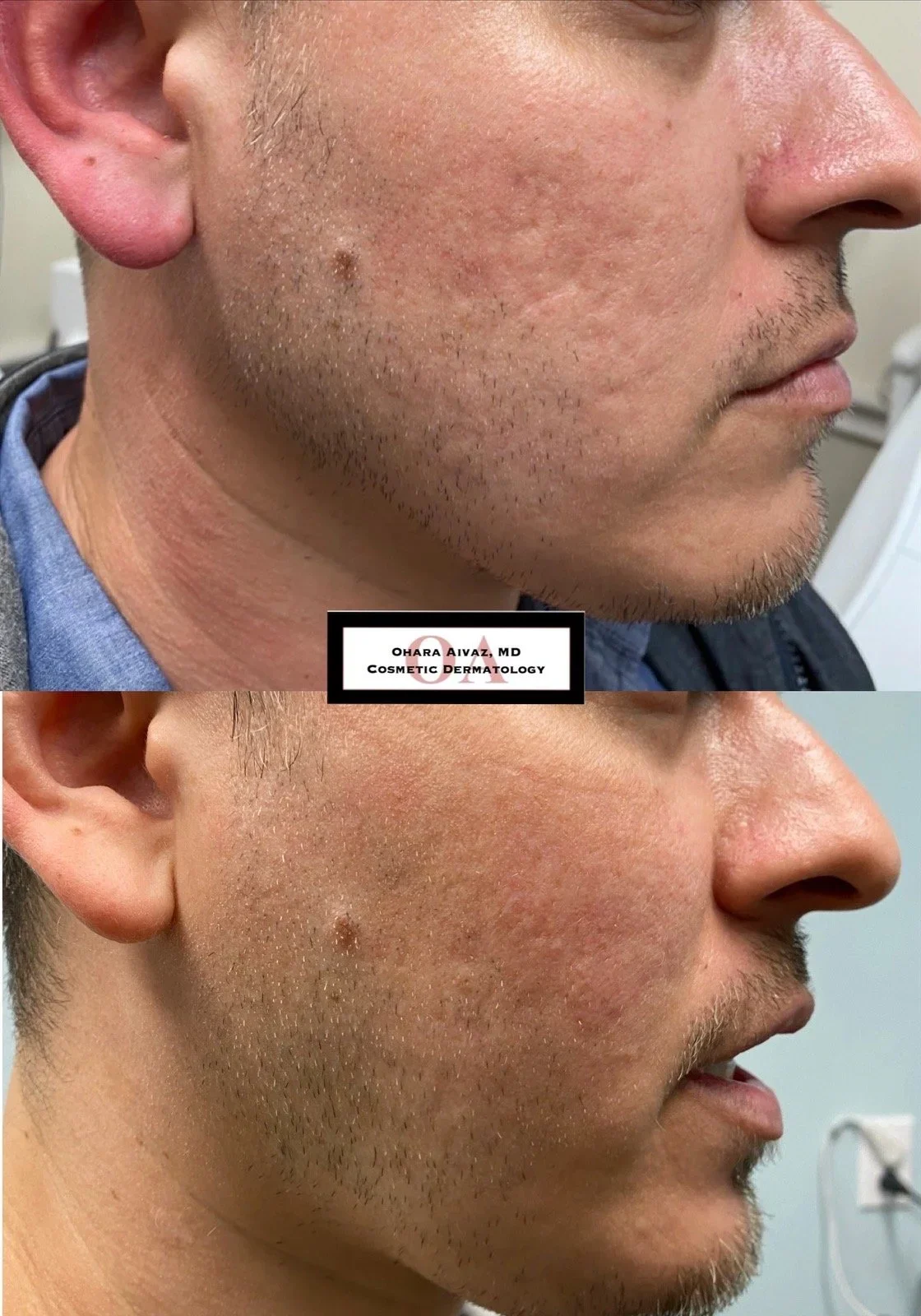
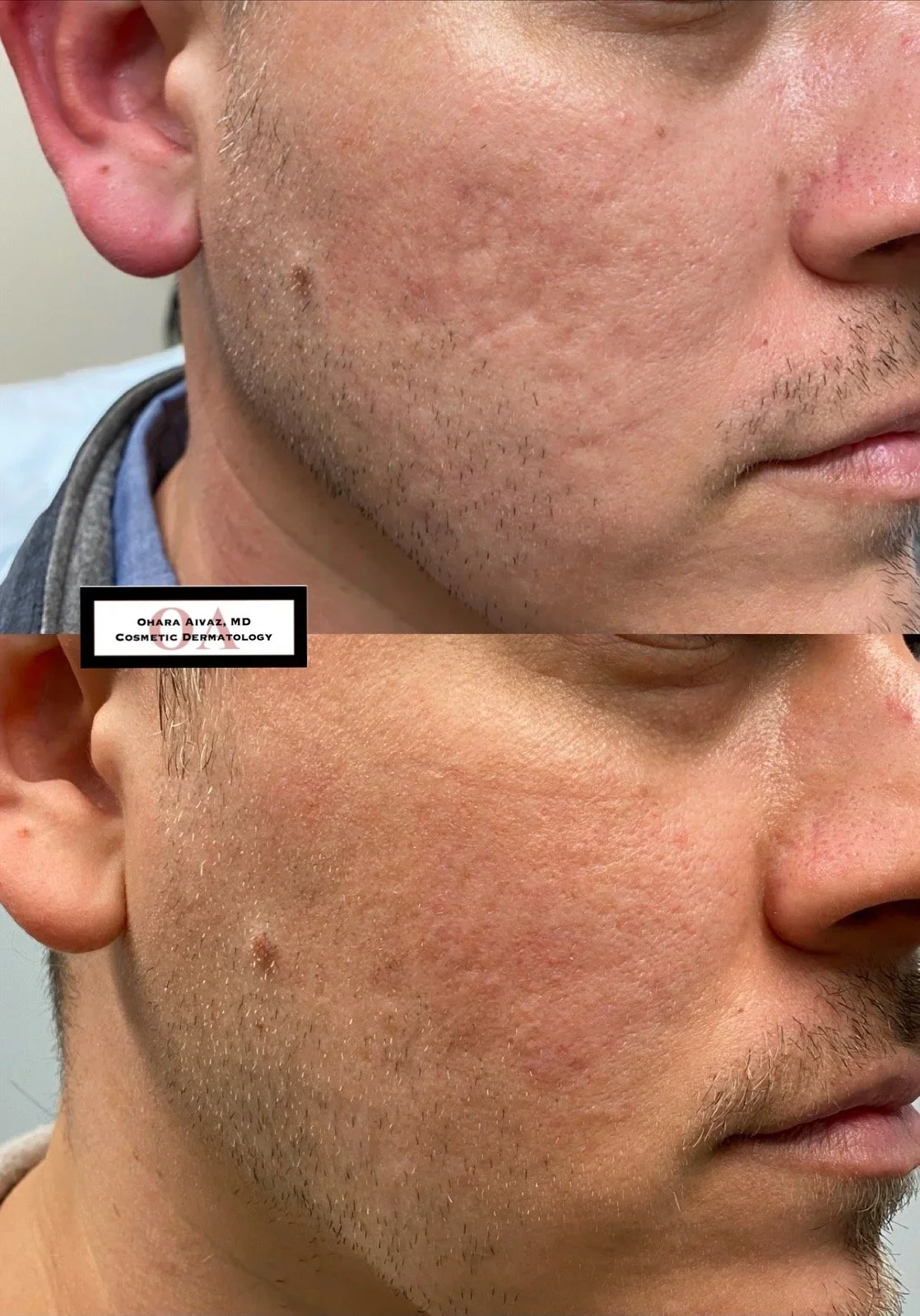
Before (Top) I After (Bottom)
A combination of radiofrequency microneedling and filler was used to treat the acne scarring on this patient’s face.
Can Laser Treatments Improve Acne Scars?
Laser treatments work by resurfacing damaged skin and stimulating new collagen formation. Depending on the scar type and skin tone, different laser technologies may be recommended to improve texture, tone, and overall skin smoothness.
Do Chemical Peels Help Acne Scars?
Chemical peels can help improve discoloration, uneven texture, and more superficial acne scars.
By removing damaged outer layers of skin and encouraging cell turnover, chemical peels may help brighten post-acne marks and smooth mild textural irregularities.
What Skincare Ingredients Help Fade Acne Scars?
Several skincare ingredients can help improve post-acne discoloration and support smoother skin over time.
Common dermatologist-recommended ingredients include:
retinoids
vitamin C
azelaic acid
alpha hydroxy acids (AHAs)
niacinamide
Consistent sunscreen use is also essential because sun exposure can darken acne marks and slow improvement.
How Long Does It Take to Fade Acne Scars?
Acne scar treatment takes time, and results are usually gradual rather than immediate.
Many collagen-stimulating treatments require multiple sessions spaced over several months. Improvement often continues developing as the skin heals and produces new collagen.
What Is the Best Way to Prevent Acne Scars?
The best way to prevent acne scars is to treat acne early and avoid picking at breakouts.
Continuing acne treatment while treating scars is also important because new breakouts can create additional scarring.
What If You Are Still Getting Active Acne Breakouts?
If you are still experiencing active acne, treating the breakouts themselves is an important first step before focusing entirely on acne scars.
New breakouts can continue causing inflammation and increase the risk of developing additional scarring over time. For many patients, the most effective approach is combining acne scar treatments with a personalized acne treatment plan tailored to their skin type and severity of breakouts.
If you are continuing to break out or noticing new acne scars forming, a consultation can help create a personalized treatment plan for clearer, healthier-looking skin.
Frequently Asked Questions
-
Some discoloration — the flat red or brown marks left after a breakout heals — can fade gradually over time with consistent sun protection and skincare. However, textural scars such as ice pick, boxcar, and rolling scars do not go away on their own. They require targeted treatment to significantly improve their appearance.
-
The fastest results come from professional in-office treatments rather than over-the-counter products alone. Laser resurfacing, microneedling, chemical peels, and filler for depressed scars are the treatments I use most often at Ohara Derm to deliver meaningful improvement in the shortest amount of time. A combination approach typically works best because different scar types respond to different treatments.
-
It depends on the type of scar and the treatment used. Post-inflammatory hyperpigmentation — the dark or red marks after a pimple heals — can take several months to improve with consistent skincare and sun protection. Textural scars treated with collagen-stimulating procedures like microneedling or laser typically require multiple sessions spaced over several months, with results continuing to develop as the skin produces new collagen.
-
Yes, and it is one of my most recommended treatments for acne scarring. Microneedling creates controlled micro-injuries beneath the skin that stimulate collagen production, which helps fill in depressed scars and smooth uneven texture over time. Most patients need a series of sessions for the best results.
-
Yes — and this is one of the most underrated steps in acne scar treatment. Sun exposure darkens post-inflammatory hyperpigmentation and slows the skin's natural healing process. I recommend wearing a broad-spectrum SPF 30 or higher every single day, even when staying indoors near windows, to protect existing marks and prevent new dark spots from forming.
-
You can, but controlling active breakouts is an important part of the plan. New breakouts continue to cause inflammation and increase the risk of developing additional scarring over time. For many of my patients, the most effective approach is combining acne scar treatments with a personalized acne treatment plan so we are not putting out one fire while another starts.
-
No, and the distinction matters for treatment. Dark spots — also called post-inflammatory hyperpigmentation — are flat discoloration left after the skin heals. They are not true scars. True acne scars involve a change in skin texture, such as indentations or raised areas, caused by damage to the deeper layers of skin. Both can often be treated, but they respond to different approaches and it helps to know which you are dealing with before choosing a treatment plan.
If you are noticing dark spots and are not sure what is causing them, I go into much more detail on this in Why Am I Getting Dark Spots?